
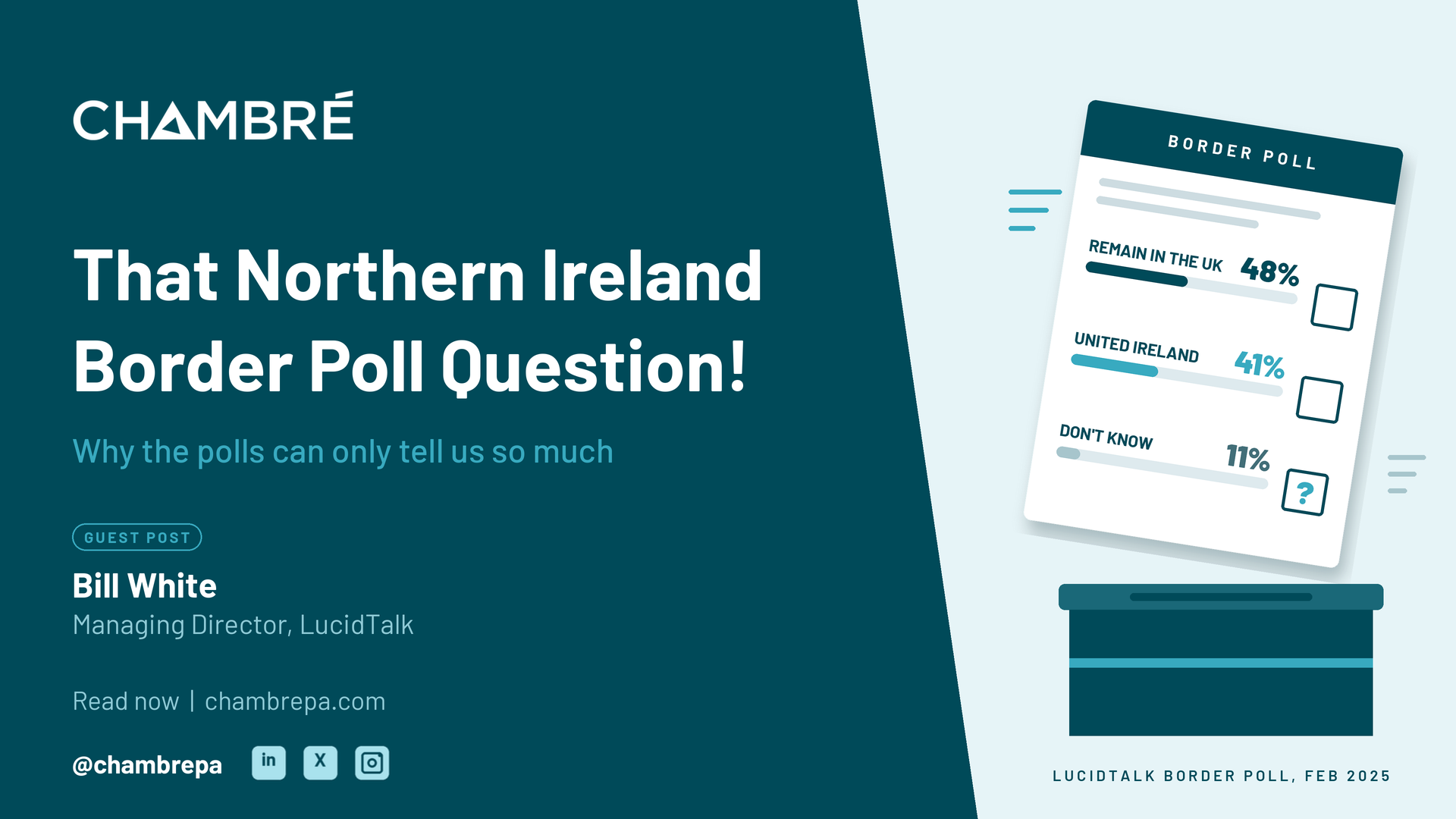
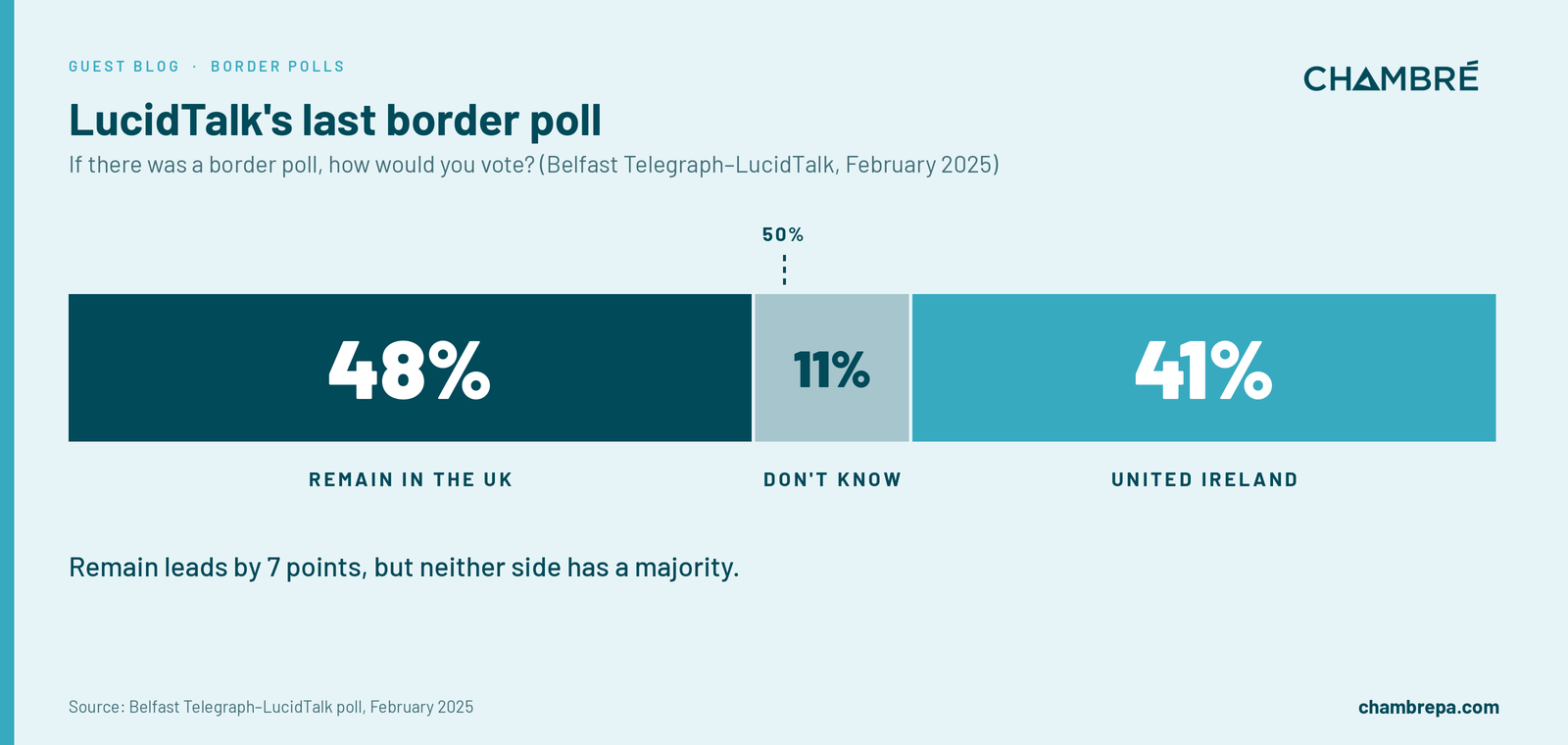
In the upcoming quarterly Belfast Telegraph – LucidTalk Autumn26 poll, LucidTalk will be polling again with those two classic poll questions: Should there be a NI Border poll?, and if there was one, what way would you vote? On the latter, the last time LucidTalk asked this question (Belfast Telegraph – February 2025), the result came in at pro NI to remain in the UK at 48%, pro United Ireland (UI) at 41%, with the ‘Don’t Knows’ at 11%.
It has been said there are differences between the various polls and surveys on this issue, and there are, and there always will be, especially if the polls are run at different times, and with differing methodologies. These differences are often exaggerated as the various sides promote (or spin) the results to suit their own agenda, and this is particularly true with a hotly debated issue like a NI Border Referendum.
However, there is one NI Border Referendum poll result that all the NI polls and surveys sort of agree on – and that’s support for NI to remain in the UK. All polls/surveys over the past 5-7 years have this key status-quo result at around 50% (give or take a few % either way). Mind you, the five most recent polls during the 2024 to 2026 period, have been showing this critical ‘pro-NIintheUK’ score dropping downwards e.g. the NI post 2024 General Election survey (Liverpool University, co-ordinated by Prof. Jon Tonge) – 49%, the ARINS/Irish Times poll – 48%, LucidTalk poll (Feb 2025, as per above) – 48%, and the two most recent annual Northern Ireland Life and Times (NILT) surveys: 42% (2025), and 45% (2026).
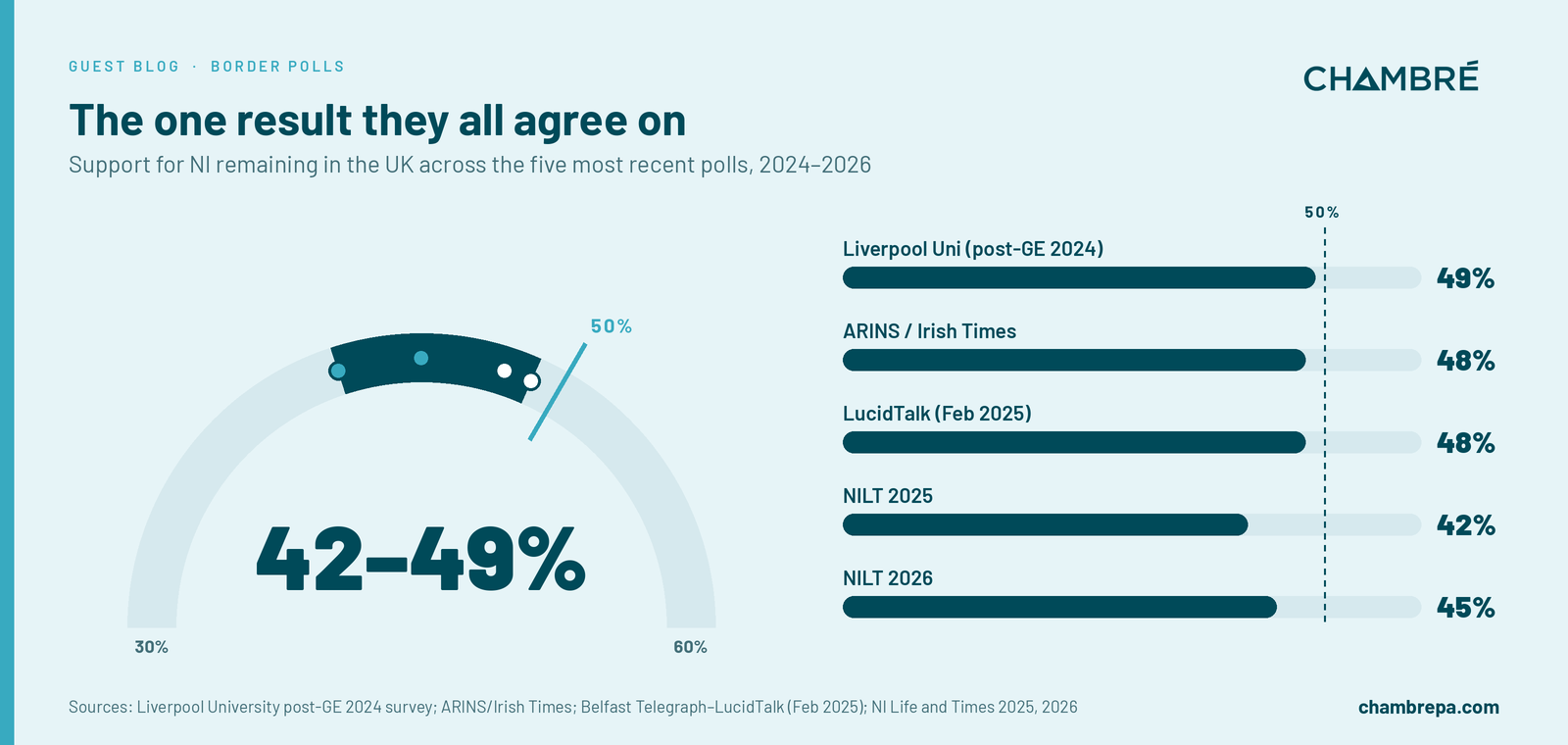 The remaining c.51%–58% is split in the polls between pro united Ireland and Don’t Knows. For example, the five most recent NI Border referendum polls have pro-united Ireland (UI) at 34% (both the Liverpool University post-2024 General Election survey and the ARINS/Irish Times poll), 41% with the Belfast Telegraph-LucidTalk February 2025 poll, and 36% with both the 2025 and 2026 NILT surveys.
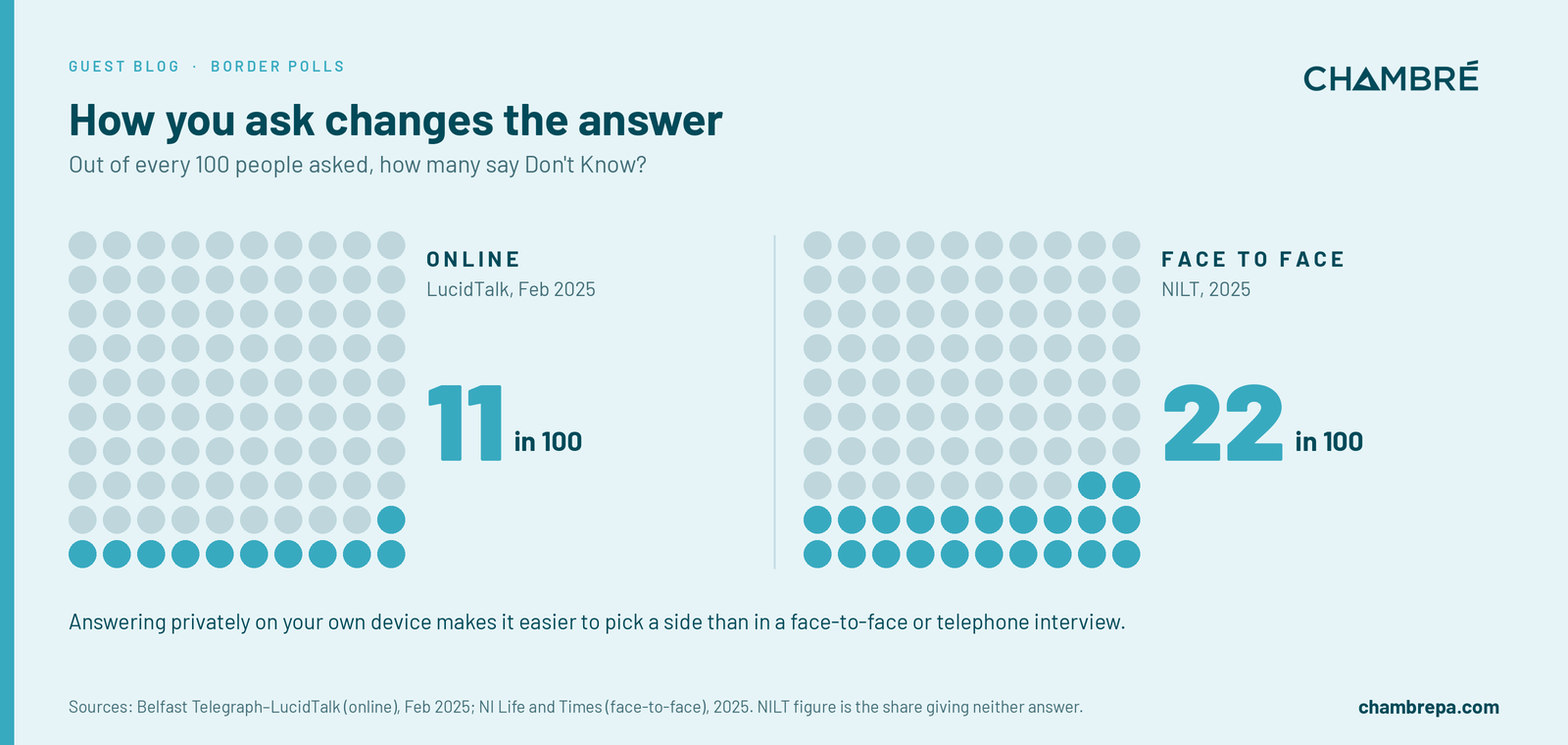
These differences are mostly connected with the poll methodology, as online polls (e.g. from LucidTalk), always show a much lower No. of ‘Don’t Knows’ than face-to-face surveys like the Liverpool University post General Election survey 2024, the NILT surveys, and the ARINS/Irish Times poll. This is due to the comfort of confidentiality that’s inherent in taking a poll online, in private, on your own PC/laptop/smartphone device, compared to an open face-to-face or telephone interview. In the latter case, it’s easier to opt for the ‘Don’t Know/Not Sure’ answer as the safe way out of a direct interview situation that you may be uncomfortable with (even sub-consciously).
An additional point to note about the NI Border Opinion Poll question is that it is asking people what they think they will do if a certain event arises (i.e. a NI Border poll), at some indeterminate date in the future, with the choice being between a currently hypothetical united Ireland and the current status-quo of NI remaining in the UK.
 However, human beings are not very good with these sorts of hypothetical predictions. As Anthony Wells, then director of political research at world-leading polling company YouGov (now its Global Head of Politics, Elections & Public Data), has said “You can ask respondents to predict their own future opinions about hypothetical situations, but that doesn’t mean we as human beings are necessarily very good at doing this sort of thing”.
This is why referendums on constitutional issues, like the 2014 Scottish Independence referendum, are very campaign dependent, with opinion (and the polls) varying significantly during the campaign period. At the present time, respondents may think they know what way they will vote in a NI Border Referendum i.e. they are answering the poll questions honestly, but in reality, a lot of them really don’t know, and they could easily change their mind.
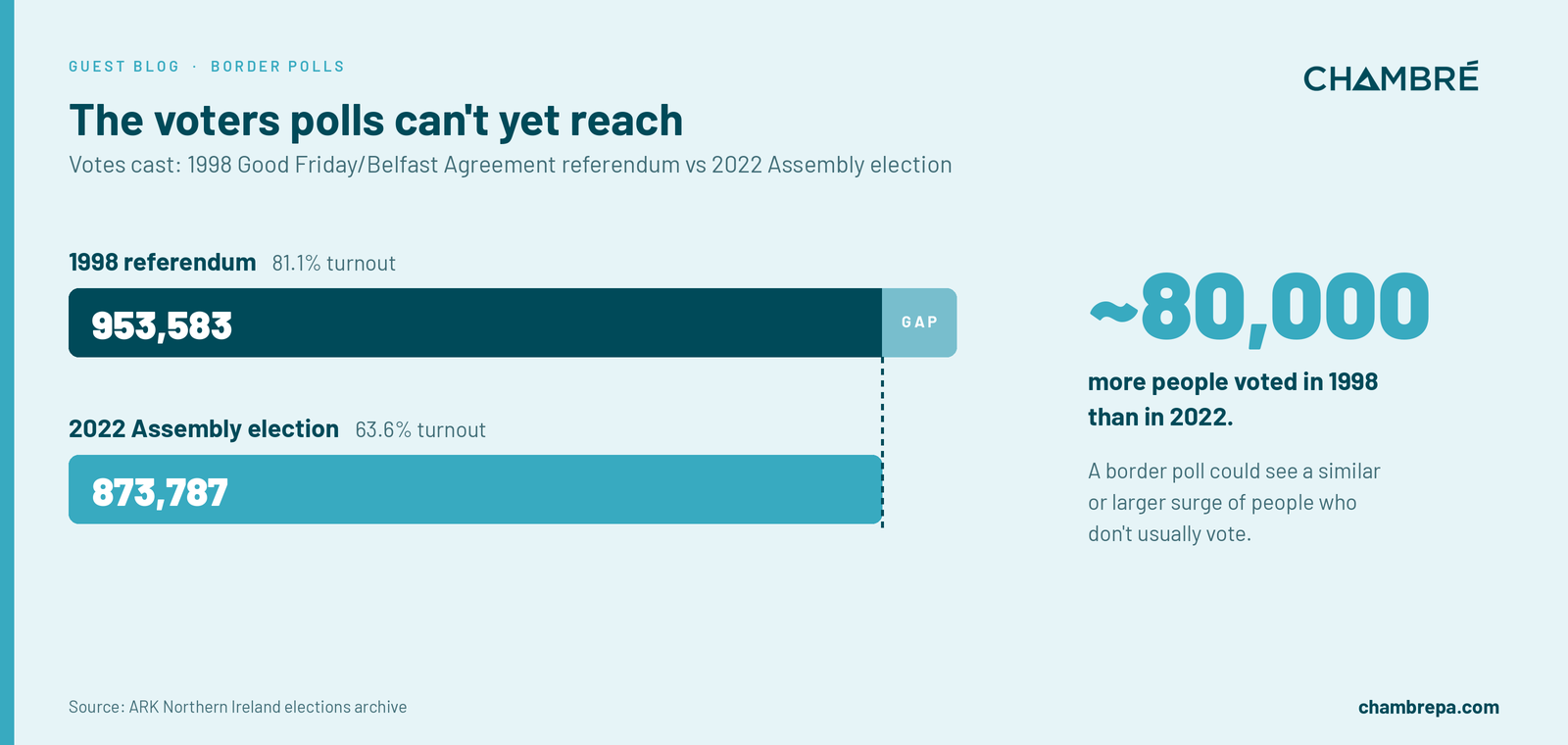
So it’s not surprising that the pro united Ireland poll scores will vary a bit, as a united Ireland is still the unknown in the question, with even fervent republicans admitting it has yet to be defined in terms of its structure and how it would work. It also should be noted that the 1998 Good Friday/Belfast Agreement referendum drew around 80,000 more voters than the 2022 Assembly election, and a NI Border Referendum could see a similar or larger surge of people who don’t usually vote – and until a referendum is called and a campaign is underway, it is very difficult to get a view on how this crucial sector will vote in a NI Border Poll. This is why polls won’t be able to get a more meaningful view on what Northern Ireland really thinks about its current constitutional status versus the alternative, until a referendum date is set (if ever), a campaign is under way, and we start to get some answers to the 100’s of questions about a united Ireland, and what form it would take.
 So it will be interesting to see what the upcoming Autumn26 Belfast Telegraph – LucidTalk poll says about this issue, as all polls and surveys about the NI border topic are still useful and give an approximate “feel” for current opinion in Northern Ireland. But be careful about reading too much into them at this stage, especially those mid-30s poll scores for a hypothetical, still-unknown united Ireland.
The actual results in a real “live” border referendum could be very different.
Bill White is Managing Director of Belfast polling and market research company LucidTalk. You can follow LucidTalk on X: @LucidTalk.
